Hip-hop's 'The Shape of Jazz to Come'
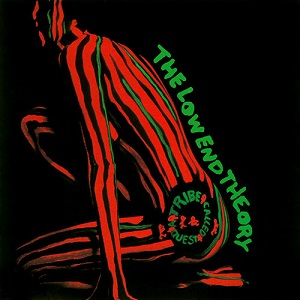
I’m starting a new music review series on this blog, a running list of my favorite albums, the formative ones, the new things coming out, whatever I’m listening to at the moment. It’s a way to durably keep track of the ratings and write a little about each one and what it means to me. There’s no better place to start than this one, because this is where it all started:
The Low End Theory is the album that made me fall in love with hip-hop and the whole 90s boom bap, jazz-influenced era. It’s also the record that got me into jazz itself, not just as a listener but as a sample hunter. Ron Carter is just about the only musical contributor here who isn’t Q-Tip or Ali Shaheed Muhammad, and the Blue Note samples stretch across the whole record. I tracked them all down eventually, and I’ve probably listened to ninety percent of the samples on this album by now.
To me this is about as close to perfect as the album concept gets. The visual, the musical aesthetic, it’s all cohesive and coherent, and you still see people going back to this record to this day, the sound, the colors on the cover, the frequency spectrum of it. The title is doing double duty. It’s a reference to the bass register, and to the mixing and production techniques that shaped the record. Q-Tip and Ali Shaheed Muhammad are a big influence on my production, and Bob Power has a huge influence on my mixing philosophy.
You don’t even need to listen closely to enjoy it. From another room or from car speakers, you can hear the basslines and the jazz samples carrying the whole thing. It just sounds good, and that on its own is worth something most albums never get close to.
The only real knock, and the reason I didn’t give it a 10.0, is that some of the lyrics and subject matter feel dated now. One song didn’t even make the album because it was offensive and homophobic, and knowing that backstory, some of what’s on the record hasn’t aged too well. It was 1991, a different time where those things were handled differently, and parts of it can be a little hard to listen to.
I don’t listen to it as much as I used to, partly on purpose. I try to save it for special occasions when I can appreciate the tracks individually, because I had it on constantly for so long that it stopped being an event. These days it functions more like a blueprint for me when I’m working on my own production. That’s the short version of why it earns the 9.8.
Next in the series is another formative favorite, Midnight Marauders….
Credits